
Point Acquisitions Blog

A vacant second-generation Quick Service Restaurant (QSR) asset rarely costs what it appears to on paper. To an owner or prospective purchaser, an existing footprint with an installed hood system, marked drive-thru lanes, and an inground grease interceptor looks like a turnkey head start. In practice, the economic gap between “existing infrastructure” and a space that a modern national tenant will execute a lease on is where many re-tenanting budgets collapse. Our team routinely evaluates these assets—former burger, chicken, taco, and sandwich concepts situated on pads and outparcels, frequently vacated following franchisee insolvencies or corporate portfolio optimization. The deals that…

In May 2026, Point Acquisitions partnered with EvCap Investments to acquire Tuscani Pointe, a 66,000 SF multi-tenant retail center located at 711 E. Carefree Highway in North Phoenix, Arizona. Transaction & Property Overview Asset Metric Property Detail Asset Size 66,000 SF Multi-Tenant Retail Location 711 E. Carefree Highway, Phoenix, AZ Occupancy at Closing ~73% (27% Vacancy) Core Thesis Submarket growth via TSMC expansion + Medtail repositioning Partnership Point Acquisitions & EvCap Investments Closing Date May 2026 The Opportunity & Market Context At closing, the property had an in-place occupancy of roughly 73%. Passive buyers and rigid institutional capital passed on…

Unanchored strip centers are easily one of the most misjudged corners of retail commercial real estate. On paper, they look like low-maintenance income: no major anchor to negotiate with, accessible entry prices, and straightforward bay layouts. In reality, they require sharp operational precision. When you get the fundamentals right, these assets deliver high yields and strong upside through lease-up and repositioning. Get them wrong, and you’re stuck holding a half-empty property burdened with struggling mom-and-pop tenants, unexpected capital repairs, and zero natural foot traffic to rescue you. Winning with unanchored retail almost always comes down to diligent, clear-eyed underwriting. Understanding…

Automotive retail properties — oil change shops, tire and auto service centers, quick lube bays, and full-service repair facilities — have quietly become one of the more interesting segments in single-tenant and small-bay retail real estate. The category is durable (cars still need maintenance regardless of economic cycles), the tenant pool is deep, and there is a growing universe of institutional-grade national operators actively expanding their footprint. But not every auto property is the same deal. There are three distinct situations where we see the most opportunity: corporate-occupied NNN assets, owner/user operations that haven’t been repositioned, and properties with short-term…

Every shopping center owner eventually faces the same fork in the road: pour more time and capital into re-leasing vacant space, or sell the asset and redeploy that equity elsewhere. The right answer isn’t always obvious, and waiting too long to decide can quietly erode the value of the property. Here are the signs worth paying attention to. What the Re-Lease-or-Sell Decision Comes Down To Re-leasing makes the most sense when the center has strong bones — a stable or replaceable anchor, a trade area with healthy demographics, and a tenant mix that’s still in demand — and you have…

Understanding what qualifies a shopping center as grocery-anchored can mean the difference between a stable, in-demand investment and an overpriced retail gamble. Not every shopping center with a supermarket nearby gets to call itself “grocery-anchored.” The term has a specific meaning to lenders, appraisers, and institutional buyers, and it directly affects how a property is valued, financed, and sold. If you’re evaluating a retail acquisition or considering a sale, knowing exactly what qualifies — and why the label commands a pricing premium — is the first step to getting the deal right. What Is a Grocery-Anchored Shopping Center? A grocery-anchored…
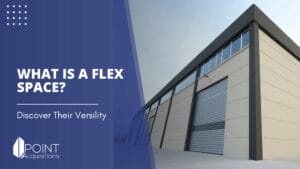
Maximize the value of your commercial property by understanding what a flex space has to offer in today’s evolving real estate market. Flex space is a type of commercial real estate that blends office space, warehouse space, and sometimes retail operations into a single property. These flexible spaces are designed to accommodate evolving business needs by offering open layouts, private offices, and space that can shift between administrative tasks, storage, or light manufacturing. This hybrid model challenges traditional office space layouts and caters to the growing demand for flexible workspaces. Many modern businesses now favor flex properties due to the…

Practical steps to revive, position, and sell your commercial real estate property—without wasting money or time If you’re sitting on a vacant strip mall, you already know it’s a bleeding liability. No rental income, no tenants, and no serious bites from prospective buyers. Maybe it’s been months. Maybe it’s been years. Either way, the property is costing you more money than it’s worth, and the commercial real estate market isn’t exactly forgiving to underutilized retail space. But here’s the good news: You don’t have to gut-renovate your shopping center to sell it. You just need to position it right, and…

Making the most of your commercial real estate requires the right tools and strategies. For many property owners, a sale-leaseback model offers an effective way to unlock capital while continuing to use the property. But how can you determine if it’s the right move for your business? The sale-leaseback calculator is a simple yet valuable tool that helps property owners weigh their options and make informed financial decisions. At Point Acquisitions, we’re committed to helping you find smarter ways to maximize the value of your assets. In this guide, we will explain how to use the sale-leaseback calculator and show…

You’ve got equity tied up in your commercial property—and the market’s shifting fast. Maybe you’re eyeing new equipment, trying to clean up the balance sheet, or simply need capital without taking on more traditional debt. But which route makes more sense—sale leaseback or commercial loan? And how much does that depend on the type of property you own? A sale-leaseback transaction generates liquid capital from an illiquid asset, while a traditional loan lets you retain property ownership but often comes with restrictive debt covenants and less flexibility. The smartest move depends on your asset—and your goals. Here’s how the choice…